
School-based mental health professionals play a vital role in our educational community, which includes serving as a resource for students, educators, and parents. Their primary focus is on helping students achieve academic success, discover value in the virtues of our classical curriculum, assist in navigating the challenges of school and understand what it truly means when we say, “Learn the true, do the good, and love the beautiful”. We teach students the importance of thinking and learning, the impact it has upon behavior, and its power to help us make positive choices.
How We Help Support Students
- Support students in their efforts to thrive in the classroom setting.
- Aid in the development of skills such as executive functioning, mental wellness, and interpersonal relationships.
- Provide care when students experience life events that can contribute to grief, fear, anxiety, or present other challenges that are interfering with their ability to access the classroom.
- Work with the School-wide Crisis Team to develop appropriate plans in response to student needs.
Parameters around School-based Mental Health Services
- Parents are responsible for the mental health of their children. The Ascent Mental Health Team serves as a resource. We are never the primary level of support and we do not provide ongoing counseling services.
- If you are looking for specific resources for your child or family, we can direct families to community-based resources when requested.
- We want to maintain open communication pathways with parents around issues their child may be experiencing within the school setting.

Executive Function for Youth
“The Big Three”
No one is born with executive functioning skills. They must be taught. Children learn these skills through direct instruction, seeing how others use them, and practice-practice-practice.
1. Inhibitory Control or SELF CONTROL: This is simply knowing the difference between “need” and “want”. You give priority to “need” over “want”. Children “need” to be taught that “wants” only come after a “need” has been met. For example, completing homework or chores is a need that enhances learning and family function, which becomes a priority over the want to play. Play is important, but in most cases is a lesser priority over other things. Inhibitory Control teaches impulse control, delaying gratification, regulating emotion, goal setting, and decision-making skills.
2. WORKING MEMORY: This is simply holding onto 4-7 different things at the same time. We live in a fast-paced world that experiences information overload. So how do we build working memory when sometimes life feels like drinking from a fire hydrant?
-
-
- Teach how to write schedules and to-do lists;
- Teach how to ask questions for clarity;
- Teach positive lifestyle habits, being active both physically and mentally, getting good sleep and rest, identifying triggers that can make a person uncomfortable, and bring structure and routine into daily life.
-
3. COGNITIVE FLEXIBILITY: This is simply knowing how to adjust to changes that happen in life. It’s like figuring out how to turn down the water flow gushing from a fire hydrant so you can actually drink safely. A simple model to teach when “stuff happens” is this: (a) Take a “pause” break; (b) “think” about what needs to happen; (c) Make a “plan” and try it; (d) “change” your plan when needed.
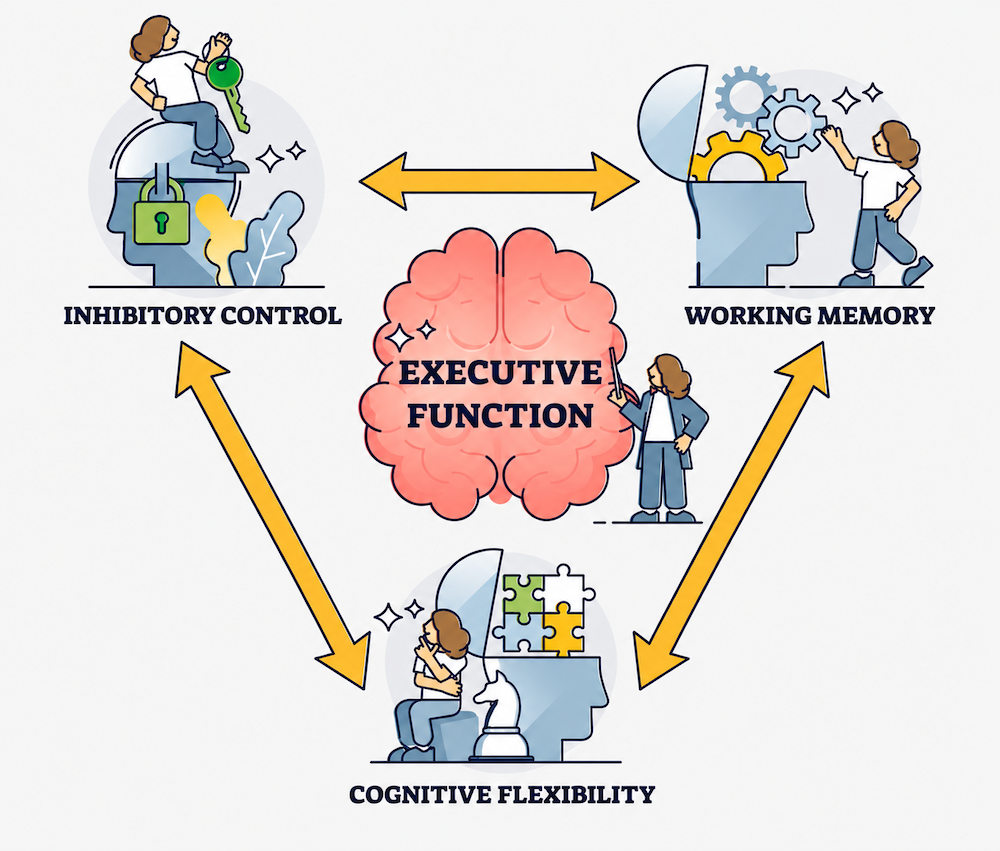
The “big three” are the most important areas upon which to focus teaching. There are other areas associated with Executive Functioning, but they all stem from the “big three”. Other areas include:
Activation
Organizing tasks, prioritizing, and getting started.
Focus
Sustaining and shifting attention to tasks.
Effort
Alertness, quickness to get things done, sustaining effort.
Emotion
Managing frustration and general emotion.
Memory
Recalling what needs to be done.
Action
Monitoring and regulating behavior.
Are weaknesses in Executive Functioning considered a disability? By themselves, NO. Executive Functioning can be impacted by other neurodevelopmental challenges or disabilities, but the skills of Executive Functioning can be learned.